
Rodents: Rats & Mice

The Problem: structural destroyers
What are Rodents?
Rodents, primarily rats and mice, are highly intelligent, adaptable mammals that have lived alongside humans for centuries. Because they are "commensal" (meaning they share our table), they depend on human structures for food, water, and warmth. Their most defining feature is their incisor teeth, which never stop growing, forcing them to gnaw on hard materials constantly.
How Did They Get In?
Rodents are masters of entry and can squeeze through impossibly small gaps:Structural Gaps: Mice can fit through a hole the size of a pen (6mm), while rats only need a gap the size of a quarter (20mm).Utility Lines: They often follow pipes, cables, and sewer lines directly into a building.Roof & Vents: Rats are excellent climbers and can enter through roof vents, chimneys, or overhanging tree branches.
Signs of an Infestation
Rodents are nocturnal and secretive; if you see one during the day, the infestation is likely severe. Look for:

Droppings
Small, dark, pellet-shaped waste found in cupboards, along baseboards, or near food.
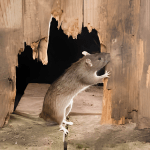
Gnaw & Rub Marks
Damage on wooden structures, plastic containers, or electrical wires. Dark, greasy stains on walls caused by the oils in their fur as they run along the same paths.

Nesting Material
Shredded paper, fabric, or insulation gathered in dark, undisturbed corners.
Protect Your Infrastructure
A single pair of rats can lead to 1,200 offspring in a year. Early detection is the difference between a simple fix and a structural catastrophe.
essential facts regarding rats
Social Intelligence
Rats are highly social and communicate using high-frequency ultrasound that humans cannot hear. They even exhibit "pro-social" behavior, such as sharing food or helping other rats in distress.
Highly Developed Senses
While they are legally blind and colorblind, they use their whiskers (vibrissae) to "map" their surroundings in the dark. They can detect microscopic chemical changes in food, which is why they are so good at avoiding low-quality poisons.
Memory Masters
Once a rat learns a route through a building or a maze, they rarely forget it. They create "runways" using pheromones in their urine to guide other members of the colony to food sources.
Continuous Growth
A rat's incisor teeth grow between 4 to 5 inches per year. They must constantly gnaw on hard materials (wood, lead pipes, cinder blocks, and electrical wires) to wear them down, or the teeth would eventually grow into their own skulls.
Super-Breeders
A single female rat can mate up to 500 times in six hours. One pair of rats can technically produce a colony of over 1,200 descendants in a single year under ideal conditions.
Physical Agility
Rats are Olympic-level athletes of the pest world. They can jump 3 feet vertically, fall from a height of 50 feet without injury, and tread water for up to three days straight.
Did You Know?
“A rat can squeeze its entire body through any opening that its head can fit through—usually a gap no larger than a quarter (20mm). If the head goes, the body follows.”
Our Professional Solution
We use an Integrated Pest Management (IPM) approach to clear your property and keep it that way:
- Full Site Inspection
- Strategic Baiting & Trapping
- Structural Exclusion
- Sanitation & Monitoring
- Long-Lasting Protection
